No. Stem that has already stretched stays stretched, because the wall of a growing plant cell expands and does not shrink back. More light changes what grows next, so the long gaps between the leaves stay where they are. To get a compact plant back, cut off the top and root it. Stretching alone does not mean the plant is dying, but it does have a cost.
One limit belongs up front. We found no study that followed a stretched succulent after it was given more light. “The gaps stay” comes from how plant cells grow, and “new growth tightens” is what the light rule predicts. Neither has been tracked on a succulent.
A three-week-old succulent in an office was heading for the ceiling, and it already sat in the best spot available, so the usual advice to move it was no help. Its grower took the question to a thread.
One of the strongest replies simply prescribed more light. Another reader pushed back on the title, doubting that the plant was suffering at all, and a third wondered whether it was flowering. All three are fair responses, and each one is really a separate question.
Is It Stretching, Flowering or Just Age?
Look at the gaps, not the height. The bare piece of stem between two points where leaves attach is called an internode. North Carolina’s Extension Gardener Handbook says “Too little light causes a long internode and a spindly stem, an occurrence known as stretching or etiolation.”
So the reader who treated etiolation and stretching as the same thing was right: an etiolated plant is a stretched plant. Height alone can mislead, because a plant also gets taller by adding leaves at a normal spacing.
Gaps are the part that responds. In a Dutch study of 20 kalanchoe cultivars (named varieties), height tracked internode length closely (r² of 0.86) and internode number hardly at all (0.15). That study compares cultivars rather than light levels, so read it as a reason to look at gaps, not as a light result.
Stretching. Compare the newest gaps with the older ones lower down. If the leaves near the top sit further apart than those below, the whole growing tip has been carried upward, and the plant has been stretching. A rosette, the tight circle of leaves, pulled open into a loose spiral is the common form of this.
Flowering. A flower stalk leaves the rosette behind. North Carolina’s Echeveria page says “rosettes will produce one or more flower stalks that rise above the rosette”, while the rosette itself stays put.
The kalanchoe study also found the internodes of the flowering stem “significantly longer” than the leafy ones, so a long stalk is normal there.
Age. A bare stem under a tight rosette need not mean low light. The same page says an Echeveria stays close to the ground “for a while”, until “the leaves wither and drop from the bottom of the stem”. The test is the rosette. If it is still dense, you are looking at an old plant.
Some succulents also trail or sprawl by nature, so look up your plant’s normal form before you diagnose it. A long stem is only a symptom in a plant that would otherwise be compact.
What to Do With the One You Have
Deal with the light first, then decide about the shape.
The order matters. A cutting put back in the same dim spot faces the same conditions that stretched its parent, so cutting alone would probably give you another stretched plant. That is our reasoning, and it follows from the handbook’s rule.
If you can move it. Move it to the brightest spot you have. Do it in steps. Arizona Extension, writing about agave, aloe and cactus, says greenhouse-grown plants can be acclimated by “gradually moving them out into full sun over a period of weeks”.
Going too fast has its own cost. Arizona warns that parts of a plant that “have not been acclimated to direct sun will burn easily”, and a burned patch shows first as yellow. A plant raised in dim light is the case to take slowly.
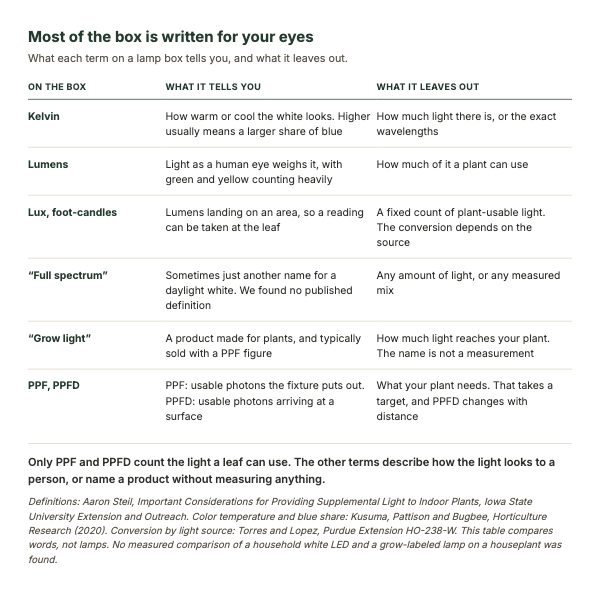
If it cannot move. This was the office grower’s position, and it leaves three honest options: add a grow light, take the plant somewhere brighter, or keep a different plant there. One reader offered a distance for a small lamp, but nothing we read supports that figure.
What a grow light label tells you covers how to judge a lamp and how to tell whether it is working. A plant that tolerates dim rooms is the third option, and why no houseplant likes low light explains what “tolerates” really means.
If you want the compact shape back. Iowa State Extension calls the method “beheading”. “The entire rosette is cut off with an inch or two of stem attached”, using clean, sharp pruners or scissors. That gives you a cutting with the best part of the plant on it.
Stand it on a tray or plate and leave the cut end to callus, meaning dry and seal over, for several days, because Iowa State says a callused cutting is less likely to rot. Then root the piece in a well-drained mix such as cactus potting soil.
Pull off lower leaves if you need bare stem. Illinois Extension suggests letting a stem cutting sit “for 4-7 days” and putting at least one or two nodes, the points where those leaves came off, into the mix.
Skip the jar. Iowa State adds that most succulents “do not root well in a glass of water”, and it says rooting hormone is seldom needed.
Keep the stump. Iowa State says “In many cases, multiple side rosettes will develop on the stalk left behind”, and that they can be cut off and rooted after several months. It gives no odds, and nor does anyone else we read.
Removing the tip frees the buds below it, as what happens when you cut a plant back explains. Leave the stump where it gets good light, for the reason in the branching figures further down.
Iowa State says beheading often works well for Aeonium and Echeveria. Its wider list for stem cuttings also includes Crassula, Sedum, Cotyledon and Graptopetalum. If your plant is not on those lists, check before you cut, because a rosette you cannot root is a loss.
What light can change, and what it cannot
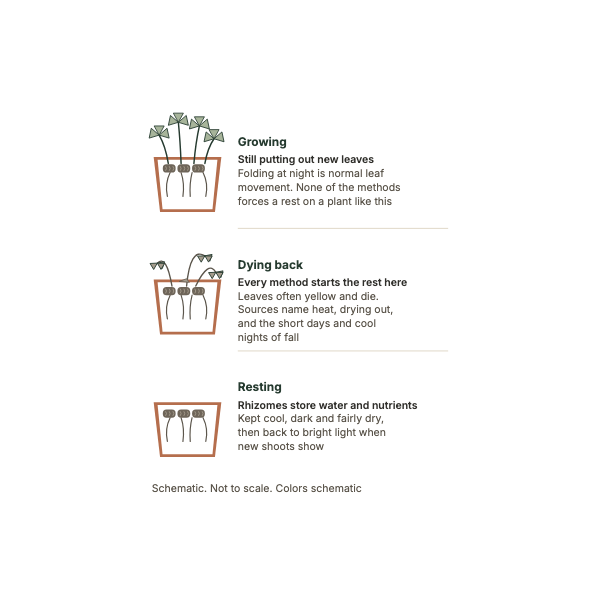
One stretched stem at three stages, showing which part of the plant each fix reaches.
Gaps already on the stem stay as they are, because a plant cell’s wall expands irreversibly. More light works on growth still to come, and only a cut removes the long stretch. We found no study that followed a stretched succulent through these stages.
If you like it as it is, leave it. You do not have to cut. Give it what light you can and accept the long stem. New growth is where any change will show, so judge the plant by the top rather than by the gaps below, which will not change.
Do not reach for fertilizer. The handbook says low fertility “decreases internode length”, so a shortage of food is not what opens the gaps. Maryland Extension says “Excessive fertilizer results in the buildup of salts and excessive, leggy growth.” Feeding cannot stand in for light, and your product’s label governs any use of it.
Water as you would anyway. The thread argued over this too. The grower had been misting the top of the mix, and one reader strongly objected. We found no test of misting potting mix for succulents. Wetting only the surface will not reach most of the roots, which is our reasoning.
North Carolina’s advice for jade is to water “in moderation when the soil is dry”. A plant in dim light dries slowly as well, as why succulents keep dying explains, so check the mix rather than a calendar.
Some sites also say overwatering contributes to stretching. We found no extension or research source for that claim.
Why the Gaps Never Close
A stem lengthens because young cells between the leaves expand. They do it by loosening their walls and letting internal water pressure push outward.
Daniel Cosgrove of Penn State writes that a plant cell’s wall is able to “expand irreversibly in surface area” between its formation and “the subsequent cessation of growth at developmental maturity”. The word that matters is “irreversibly”.
He separates two kinds of stretch in a wall. Part of it is “reversible (termed elastic)” and part is “irreversible (termed plastic)”. Growth is the second kind. A stem may give a little as it loses water, but that is not a gap closing.
His review concerns plant cells in general and does not look at a succulent. Applying it to your stem is our inference, though we found nothing suggesting succulents differ. Retail and hobby pages agree the stretch stays, and none we saw offered a measurement.
The speed of the response is a different matter. In mustard given a shade signal, stem growth came back to its earlier rate “within 16 min” of returning to sunlight, according to a 2025 review in the Journal of Experimental Botany.
So a stem can change pace within minutes. What it cannot do is give back length it has already added, which is why moving a plant stops the problem without undoing it.
That review deals with shade from neighboring leaves, which plants detect through a change in the color balance of the light, using receptors called phytochromes. Its examples come largely from mustard and from Arabidopsis, a small laboratory weed.
A succulent behind window glass has no leaves shading it, so a dim room may not send the same signal. We found no study of which signal a succulent responds to. What has been measured in succulents is the outcome.
Is It Actually Harming the Plant?
Doubting the word suffering is fair for a plant that stretched for a few weeks. It is too kind to the long run.
The best evidence comes from a 2026 Michigan State paper in HortTechnology, cited from its abstract. It opens by saying low light in homes and offices “can cause loss of foliage color and leaves, as well as excessive stem elongation in potted succulents.”
The team grew Cotyledon, Echeveria, Aeonium, Graptopetalum and jade in a greenhouse, then kept them with or without a shadecloth removing 90 percent of the light.
That gave 1.8 against 18.6 moles of light per square meter per day, about a tenth. Height rose “more rapidly” at the low level.
Stretching was not the only change. Untreated Cotyledon, jade, Echeveria and Graptopetalum had 82, 128, 577 and 172 percent more branches respectively in the brighter treatment.
Light level also “had the greatest impact on succulent foliage color”. A plant that branches less and fades is paying for the dim spot, even if it never looks ill.
The paper’s main subject was a growth-regulator drench, which held height down in most of the plants. It does not supply the missing light and we do not suggest it for home use. We rely only on the comparison between light levels.
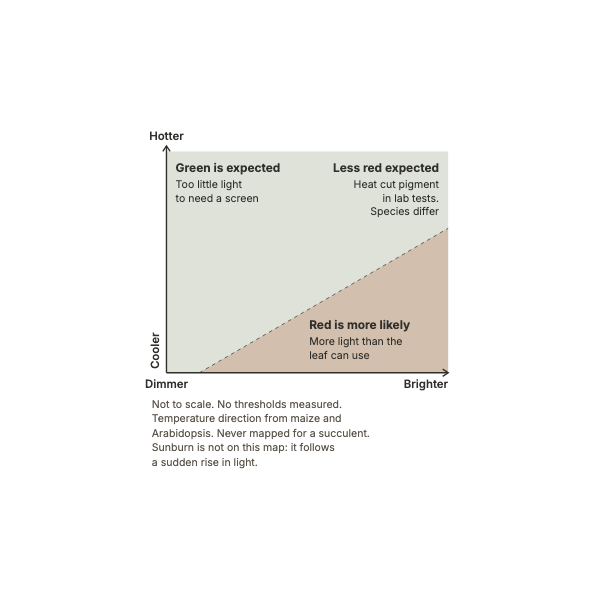
The color finding also bears on the office grower’s other worry, that pink leaves were going green. Less light is a likely reason for that, and why succulents turn red covers color. It is not the only possible reason for that plant, which readers argued had other causes.
Species differ, which is why no single figure applies to your plant. A Ukrainian garden trial, cited from its abstract, compared open ground with deep shade, at 2,500 to 3,500 lux against 39,000 to 56,500 at midday.
In the shade, internodes were 1.7 times longer in Sedum reflexum and 33 percent longer in Sedum spurium, while those of Sedum album “did not change significantly”. That was outdoors, in hardy stonecrops, so take the variation from it rather than the figures.
Day length matters too. In a second Michigan State paper, cited from its abstract, three Echeveria cultivars were tallest under days longer than 13 hours combined with low total light.
Those days were extended with very dim lamps, so a weak lamp left on late may add height rather than help. That last step is our inference, and it is one more reason to judge a grow light by how much light it delivers.
On survival, nothing we read reports plants dying of stretching itself. The Michigan State plants were still being measured at 17 weeks, but that is as long as the abstract reports. A plant short of light lives near the limit of what it can earn, which is what the compensation point describes, under why no houseplant likes low light.
Local Regulations and Safety Advisory
If you use fertilizer or pest control products, follow the label. Rules on them vary by country and locality, and your agriculture department or pesticide regulator can say what applies where you live. This article is general information, not legal advice.
Authorities to consult:
- Local agriculture department
- Pesticide regulatory authority or environmental protection agency
What Remains to Be Explored
Whether new growth tightens on a stretched succulent. We searched for a study that tracked gaps on the same plant before and after more light and found none.
A simple series of marked stems on a few common species would test both halves of this article’s answer.
How much light stops the stretching. The two Michigan State papers tested 1.8, 4.8, 12.8 and 18.6 moles of light per square meter per day, and none of those is a threshold. We found no published level for any succulent, and the reader figures in the thread are guesses.
What a dim room signals. Shade research rests on leaves filtering light, which a window does not do. Whether succulents stretch indoors because of a color signal, a lack of energy or both is unknown, and the answer could change which grow lights help most.
How often a stump branches. Iowa State says “in many cases”. We found no count for any species, or any test of whether the stump’s light level changes the result, though the branching figures above suggest it might.
Whether a stretched stem is weaker. Readers describe floppy plants, and the handbook says “spindly”. We found no measurement of stem strength in a stretched succulent, and no long-term comparison of how such plants fare.
Sources
- 3. Botany — North Carolina Extension Gardener Handbook, NC State Extension (AG-831). February 1, 2022.
- Echeveria (Plant Profile) — NC State Extension Gardener Plant Toolbox. Undated.
- Crassula ovata (Plant Profile) — NC State Extension Gardener Plant Toolbox. Undated.
- How to Propagate Succulents — Aaron Steil. Iowa State University Extension, Yard and Garden. August 2023.
- Propagating Succulents and Cacti — Candice Anderson. Illinois Extension, Hort in the Home Landscape. June 4, 2015.
- Problems and Pests of Agave, Aloe, Cactus and Yucca (AZ1399) — Jack Kelly and Mary W. Olsen. University of Arizona Cooperative Extension. March 2011.
- Fertilizer for Indoor Plants — University of Maryland Extension. Undated.
- A Single Substrate Drench of Paclobutrazol Can Prevent Undesired Extension Growth of Potted Succulents Under Postproduction Low Light Intensities — Anthony J. Soster, Sean T. Tarr and Roberto G. Lopez. HortTechnology 36(4):565-573. August 2026. Cited from its abstract.
- Short Day Lengths Can Mitigate Excessive Stem Elongation and Promote Flowering of Echeveria Cultivars Under Low and Moderate Daily Light Integrals — Anthony J. Soster, Charlie C. Smith and Roberto G. Lopez. Horticulturae 12(5):551. April 30, 2026. Cited from its abstract.
- Plant Height Formation in Different Cultivars of Kalanchoe — S. M. P. Carvalho, E. Heuvelink and B. A. Eveleens. Acta Horticulturae 691:83-90. 2005. Cited from its abstract.
- Formation of the Vegetative Sphere of Species of the Genera Hylotelephium H. Ohba and Sedum L. at Different Levels of Illumination — O. M. Zubrovskaya and T. F. Chypyliak. Odesa National University Herald. Biology 29(2):9-26. December 27, 2024. Cited from its abstract.
- Catalysts of Plant Cell Wall Loosening — Daniel J. Cosgrove. F1000Research 5:119. January 29, 2016.
- Making the Most of Canopy Light: Shade Avoidance Under a Fluctuating Spectrum and Irradiance — Romina Sellaro, Maxime Durand, Pedro J. Aphalo and Jorge J. Casal. Journal of Experimental Botany 76(3):712-729. February 7, 2025.
- Is My Succulent Suffering From Etiolation? (R/Succulents Thread) — multiple community members. Reddit, r/succulents. Undated.