A desert rose indoors is short of the two things the sources say it grows on, intense sun and heat, and it is meant to drop its leaves and rest in winter. No source read explains small, curled leaves directly, but light, the season, the pot and watering are what the evidence can speak to.
The sap is toxic, and this article gives no feeding rate. It identifies no plant or pest from the thread’s photos.
The question comes from a thread on r/DesertRose. A grower in the US West had a desert rose that made bigger leaves two years earlier, in a smaller pot by an office window.
It dropped every leaf last winter, and since being repotted into a deep pot by a west window it makes only small leaves that stay curled, yellow at the tips and fall.
The poster said they bottom-water when the caudex, the swollen base, softens, and feed a little liquid fertilizer.
Replies said it needs far more light, outdoors or under a strong grow light, against one that said unfiltered afternoon sun is the risk. Some said curled leaves mean too little water, others more grit and less water to avoid rot.
Others said the pot is far too deep and it should go shallow with the caudex raised, that a drainage layer creates a perched water table, that the plant is deciduous anyway, that spider mites curl leaves, and that it should be fed regularly.
What This Article Covers
This article covers an indoor desert rose making small, curled leaves: light, winter dormancy, pot size and depth, drainage layers, watering, mites and feeding.
It names no plant or pest in the thread; naming either is left to someone who can examine it. Related questions are in our articles on root rot, saturation and pot size, garden soil in a pot and predators for spider mites indoors.
Light and Heat
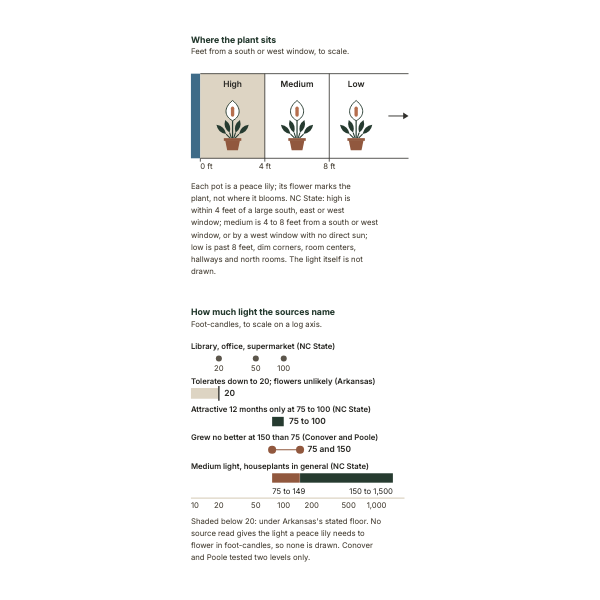
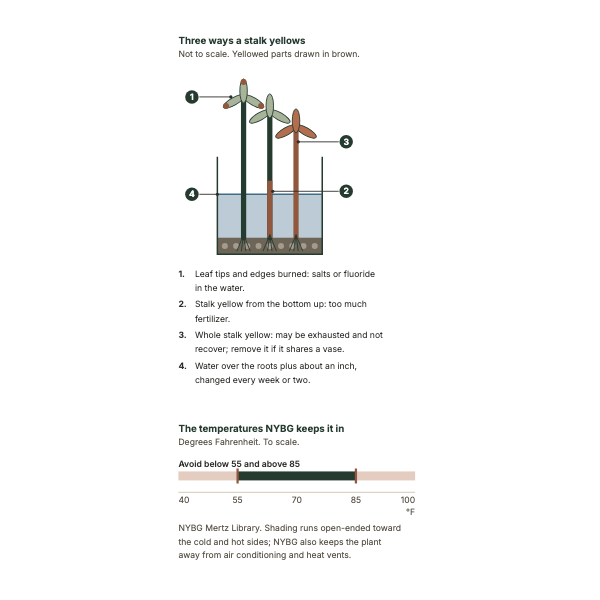
The University of Arizona’s 2021 guide to growing adeniums, AZ1953 by Michael Chamberland, says that indoors the plants are unlikely to receive the hot temperatures over 80°F or the intense sunlight they require to enter their active growing period, and do best outdoors through the warm months.
The UF/IFAS care sheet by Henny and Chen calls for bright sunlight indoors, says the plant will not flower in low light, and gives a temperature preference of 75 to 95°F. Both support the reply that the plant needs more light than a window gives.
Shade is a matter of degree. In a trial by McBride and colleagues, two cultivars grown under 30 percent shade had the most flowers and best quality ratings, plants under 50 percent shade grew tallest and widest but flowered poorly, and plants in full sun were smaller overall, according to the abstract.
The Arizona guide says adeniums can withstand a great deal of sun and appreciate a bit of light shade in the hottest season, but should not be overly shaded while growing.
It adds that they can sunburn if moved from a dark, shaded place into bright sun without a transition, which supports the reply about afternoon sun as far as a sudden move goes.
Winter Leaf Drop
The leaf drop last winter is what the sources describe. UF says that during cold winter months the grower should withhold water and let the plant rest for 3 to 4 months, that all leaves and flowers will drop as part of the natural cycle, and that the plant must not freeze.
It says the plant is chill tolerant from 55 to 35°F, but with leaf yellowing and leaf drop.
Arizona says leaf drop is normal for many adeniums in winter dormancy, though some keep their leaves, and that dormant plants should be kept dry.
It says watering may continue until night temperatures fall below 50°F, and in spring water should wait until nights stay above 50°F and new leaves begin, then be given gradually.
The Pot
The reply about an oversized pot has support. Arizona warns against overpotting, planting in an oversized pot with a large volume of soil, because the extra mix holds moisture longer, and advises repotting into a pot only slightly larger. It says root rot is a danger in cold, wet soil, and that adeniums tolerate being pot-bound.
On raising the caudex, Arizona says many growers repot adeniums higher than they grew before, which may help protect them from rot, and that it should be done gradually with each repotting.
It adds that repotting should be done in the warm growing season and not in fall or winter.
Depth works differently from volume. A 2025 study by Rowe, reviewing earlier work, says a drained pot keeps a saturated layer at its base whose depth is set by the mix, not the container, so the same mix in a shallower container holds a greater share of water.
In a smaller, shallower container, Bilderback and Fonteno found one medium held less air and more water, according to their abstract.
So a deep pot is not wetter by share than a shallow one of the same mix; the problem the Arizona guide names is a large volume of mix around a small root system.
Drainage Layers and Mix
On drainage layers, the handbook and the trial point different ways. The NC State Extension Gardener Handbook chapter on containers says never to put gravel or rocks beneath the potting mix, because water then collects in the mix just above the gravel, which matches the reply about a perched water table.
Rowe’s tests point the other way. With three potting media and no plants, drainage layers were likely to reduce water retention and almost never increased it, and for loam-based mixes most had no effect. Rowe adds that the results cannot predict whether a given plant benefits.
On the mix itself, each source gives its own recipe. UF lists rich, organic peat or bark-based bagged potting soil, while Arizona says bagged potting soil, even labeled as a cactus mix, is typically too rich in organic matter to be the main ingredient, and recommends a medium with known characteristics in a pot with several drain holes, raised off any surface and never on a saucer holding water.
Watering
Arizona says adeniums enjoy frequent watering in peak summer growth, with a thorough watering that drains quickly, and that how often depends on the mix, the pot size and how much of the pot is filled with roots. UF says to water regularly but not let the soil become waterlogged.
No source read ties small or curled leaves to too little or too much water, so neither reply on watering is confirmed here.
One cause the replies hinted at is the plant itself. A second UF/IFAS care sheet, on Adenium swazicum, says that species has gray-green leaves that appear folded and velvety, and is a smaller plant with weaker branches than Adenium obesum.
Hybrids are common, so what a plant is matters, and this article does not say what the thread’s plant is.
Mites and Feeding
UF lists mites and aphids as pests of desert rose grown outdoors and mealybugs indoors. UC IPM’s spider mite pest note describes the damage as stippling, bronzing, yellowing and leaf drop, with webbing and mites visible on leaf undersides under a hand lens. It does not describe curled leaves, so the mite reply is possible but not shown.
On feeding, UF advises a low dose of liquid fertilizer during the summer growing season, by the label, and Arizona favors a fertilizer low in nitrogen and highest in potassium while the plant grows, not while it rests. This article gives no rate.
The Sap
Arizona says adeniums have no thorns or spines and instead rely on toxic sap as a defense. No source read gave a poisoning rating for people or pets, so the reader advisory below applies.
A desert rose with small, curled leaves: what the replies got right
Six things the replies said about a desert rose making small, curled leaves indoors, and what extension sources and studies found.
| What the thread said | What the sources found |
|---|---|
| It needs far more light
Supported
Indoors is rarely enough
|
Indoors it is unlikely to get the heat and intense sun it needs to start active growth, and it will not flower in low light. In one trial, 30 percent shade gave the most flowers.
Arizona Extension; UF/IFAS; McBride and colleagues, 2014
|
| Hot afternoon sun is the risk
In part
Move it gradually
|
It can take a great deal of sun and welcomes light shade in the hottest season; it sunburns if moved from shade into bright sun without a transition.
Arizona Extension
|
| The pot is far too deep
In part
Overpotting holds water
|
Avoid an oversized pot, which stays wet longer, and repot into one only slightly larger, raising the caudex gradually. The wet layer at a pot’s base is set by the mix.
Arizona Extension; Rowe, 2025
|
| A drainage layer makes it wetter
Sources differ
Tested without plants
|
One handbook says water collects above gravel in a pot. In tests of three mixes with no plants, drainage layers mostly reduced or did not change how much water a pot held.
NC State handbook; Rowe, 2025
|
| It is deciduous; winter drop is normal
Supported
Rest it dry
|
Leaf drop in winter dormancy is normal; the sources advise keeping it dry and letting it rest, then waking it with warmth before water.
UF/IFAS; Arizona Extension
|
| Spider mites curl the leaves
Possible, not shown
Damage looks different
|
Mites are listed among its pests. Spider mite damage is described as stippling, yellowing and leaf drop; no source read describes curling.
UF/IFAS; UC IPM Pest Notes 7405
|
The sources speak to light and season: an adenium indoors rarely gets the sun and heat it grows on, and it rests leafless in winter. No source read explains the small, curled leaves themselves.
Local Regulations and Safety Advisory
If you use fertilizer products, follow the label. Rules on them vary by country and locality, and your agriculture department can say what applies where you live. This article identifies no plant. Adenium sap is described as toxic, and no rating for people or pets was read. This article is general information, not legal, medical or veterinary advice.
Authorities to consult:
- Local agriculture department
- Poison control service, or a veterinarian for a pet
- Poison control service
- Veterinarian or animal poison control service
If a child or pet may have eaten part of a plant, contact a poison control service or a veterinarian, because toxicity depends on the species, the amount and the individual.
What Remains to Be Explored
No source read explains small, curled leaves on an adenium, or ties them to water, light, a cultivar or mites. No trial compared indoor light levels for adenium leaf size.
Bagged potting mix gets two answers, and the one study of drainage layers used no plants. No source read gave a toxicity rating for the sap.
Sources
- Tiny, Furled Leaves on My Desert Rose That Fall Off Over Time? But Firm Trunk? — multiple community members. Reddit, r/DesertRose. Undated.
- Growing Adeniums in Southern Arizona (AZ1953) — Michael Chamberland. University of Arizona Cooperative Extension. September 2021.
- Florida Foliage House Plant Care: Adenium obesum (ENH1213/EP474) — R. J. Henny and J. Chen. UF/IFAS Extension. May 2013.
- Florida Foliage House Plant Care: Adenium swazicum (ENH1238/EP499) — R. J. Henny and J. Chen. UF/IFAS Extension. 2014.
- Effect of Light Intensity and Nutrition Level on Growth and Flowering of Adenium obesum Red and Ice Pink — McBride Kaitlyn, Henny Richard J., Chen Jianjun, Mellich Terri A. HortScience. April 2014. Cited from its abstract.
- Effect of Drainage Layers on Water Retention of Potting Media in Containers — A. Rowe. PLOS ONE 20(2):e0318716. February 25, 2025. Read in full.
- Plants Grown in Containers (Extension Gardener Handbook, Chapter 18) — Diane B. Mays, Kim Richter, Lucy Bradley. NC State Extension, AG-831. February 1, 2022.
- Effects of Container Geometry and Media Physical Properties on Air and Water Volumes in Containers — T.E. Bilderback, W.C. Fonteno. Journal of Environmental Horticulture 5(4). 1987. Cited from its abstract.
- Pest Notes: Spider Mites — L.D. Godfrey. University of California Statewide IPM Program, UC ANR Publication 7405. Undated.